Sunday, 15 December 2013

REVIEW: HANSEL AND GRETEL- THEATRE ROYAL, GLASGOW

Christopher Hampson's first production for Scottish Ballet employs a modern retelling of the sinister and cannibalistic Grimms tale. This version of Hansel and Gretel takes place in an unnamed town in the 1950s where children have strangely been disappearing and only the central siblings’ remain.


Gary Harris' Disney-esque set design, complete with intentionally naive and child-like illustrations is captivating and so are the lives depicted within it. Hansel (Constant Vigier) and Gretel (Sophie Martin)’s fractious but ultimately devoted relationship is well-done and Hampson has gone to great lengths to make them seem like real children by incorporating oversized furniture and ensuring that never stand up next to their parents. However, his efforts were undermined when they dance with real children at the end. There’s a vulnerability to Martin’s performance which is just right for Gretel who has given herself the role of looking after her less domineering brother. Bethany Kingsley-Garner’s appearance as the delicate Dew Drop Fairy in Act Two, complete with sparkly tutu-clad Fairy attendants, is entertaining as well as visually stunning.

The most memorable performance, however, is Eve Mutso's enchanting transformation from school teacher to beguiling ballerina to blood-thirsty horror. She’s comical as well as haunting as she entices Hansel and Gretel to sleep and later chases the mischievous pair around her food laden table. Musto's movements are macabre, verging on ugly but that's just right for her character's decline.

There is an irony and innocence surrounding the production from the set to the costumes and plot itself. Caught up in the child-like wonderment of an all-you-can-eat buffet of your dreams, Hansel and Gretel fail to notice that the witch’s house has bars on the windows in the same way that they fail to recognise the witch herself as their former school teacher.  In some respects, Hampson sugar-coats the creepier psychological aspects of the original tale with the inclusion of an array of waiters, chefs and rag dolls. However, Daniel Davidson’s villainous Sandman (his costume was inspired by Johnny Depp in Sleepy Hollow) is perhaps even more disturbing than the pantomime-scary witch.


Humperdinck’s melodic score is combined with other music, including a section from his opera, Sleeping Beauty. The absence of an evil step-mother adds another unique  element to Hampson's production. Instead, we are presented with flawed but ultimately endearing parents (Luciana Ravizzi and Christopher Harrison) who squabble over cigarettes and alcohol in the same way that their children later argue over a teddy-bear.


Hampson’s narrative does not offer much opportunity for large-scale ensemble pieces, meaning that most of the production revolves around the hero and heroine. It’s a wonder that Scottish Ballet is the first company to produce a full-length ballet of this beautifully twisted fairy tale.


Thursday, 5 December 2013

FILM REVIEW: SAVING MR BANKS

Mary Poppins, one of Walt Disney’s own personal achievements will turn 50 next year.  To celebrate, Disney Studios released a biopic about the making of the film. It’s witty and enjoyable despite being a little self-congratulatory at times.

Saving Mr Banks follows Walt Disney’s (Tom Hanks) relentless quest to persuade PL Travers (Emma Thompson) to secure him the film rights to her closely guarded children’s book, Mary Poppins. Travers halfheartedly accepts Disney’s proposal when her agent manages to convince her on the grounds that she is running out of money. Prim and uptight, Travers is not willing to let Disney sugar-coat her creation. “Mary Poppins does not sing”, she warns him, “I won’t have her turned into one of your silly cartoons.” Inevitably, the joke is on her as the film winds up being one of Disney’s most popular family favourites-with singing.

Pamela Travers would have been an interesting subject for a film even if she hadn’t penned Mary Poppins. The Australian-born novelist was the daughter of an alcoholic and unsuccessful bank manager (Collin Farrell). Unable to cope, her mother attempted suicide while Travers was still a child. The biopic flashes back to Travers’ girlhood in Australia which should have worked in theory but this is where the film loses focus, detracting from the scenes between Hanks and Thompson. Not only that, there is a suggestion that Mary Poppins is simply a thinly veiled fictionalised account of Travers' own childhood.

The majority of the action takes place in 1961 during the fortnight that Travers spent with Disney as he attempted to adapt her film for the big screen. In these scenes, the intricacy of Travers own life is ignored, instead presenting her as a lonely spinster. This was not the case in real life- although she never married, Travers did in fact have romantic relationships with both men and women. However, the rest of the film seems to be true to life- a real voice recording of Disney and Travers played at the end credits is close to  the way Thompson and Hanks depict the relationship on screen.


Collin Farrell as PL Travers father and Annie Buckley as Ginty/young PL Travers.
The humour is well done. Upon arrival in America, her driver Ralph claims that the sun has come out just to say hello to her. “Don’t be preposterous,” is her reply. “Poor AA Milne”, Travers sighs when her California hotel room is full of Winnie the Pooh toys. She arrives at Disney’s studio with what appears to be an endless list of requests and a stubbornness to not back down on any of them. “Oh no, no, no, goodness me, no, no, no”, she exclaims when she sees the initial sketch of Number 17 Cherry Tree Lane. She doesn’t want the colour red in the film, “I’ve just gone off the colour”, she states, “I’m anti-red.”

The decision to cast Emma Thompson as Travers is uncanny as new generations will recognise her as Nanny McPhee. Saving Mr Banks reveals an artist’s struggle to preserve her work. The film climaxes on the battle between art and entertainment, ultimately revealing that they can co-exist.

Tuesday, 29 October 2013

TV REVIEW: GLEE


Following Cory Monteith’s tragic death in July from drug overdose, Glee writers Ryan Murphy and Brad Falchuck were faced with the monumental task of writing a tribute episode to the well-loved actor and his character, Finn Hudson.
Aptly titled, The Quarterback, the episode opens with the cast’s rendition of ‘Seasons of Love’ from Rent, a Broadway production which centres on death at a young age. This initially seemed a little cheesy but it worked fairly well as an opening number. Controversially there is no explanation given for the cause of Finn’s death. In a voice over by Finn’s stepbrother and glee club counterpart, we were told that this information was irrelevant in a tone that suggested that we shouldn’t even be asking: “Everyone wants to talk about how he died, but who cares?” Perhaps this was to prevent Finn’s death from descending into the mere role of a plot point but even so, anyone who has loyally watched the show for the past few years deserves to know how Finn died.


At one point, Sue notes that the best tribute would be “not making a self-serving spectacle of our own sadness”- this is one of the few lines Glee has got right since it premiered four years ago. The Quarterback follows the same formula of every other Glee episode: Mr Schuester writes a task on the board and the New Directions have to sing songs relating to that. This time he writes “Finn” and the characters sing a range of songs that remind them of the late quarterback , including James Taylor’s ‘Fire and Rain’, The Pretenders’ ‘I’ll Stand By You’ and Bruce Springsteen’s ‘I’ll Surrender.’

One thing Glee got right this time was its exploration of individual grief. The scenes with Finn’s mother (Romy Rosemont) sorting through her son’s belongings are heart breaking. This was the episode’s most poignant non-musical scene. With reference to musical scenes, Lea Michele, Montieth’s on and off-screen girlfriend is the star of the show. She doesn’t make an appearance until halfway through the episode but her cover of Make You Feel My Love, the first song she and Finn sang together in the car, is beautifully done and almost uncomfortable to watch.

For the most part, the writers handled Finn’s death (and by extension, Monteith’s) well. However, Quarterback served more as a flawed tribute to the life, but not the death, of Cory Montieth and it is unlikely that Glee will survive much longer without its leading male character.

Previously published here  

Saturday, 19 October 2013

FILM REVIEW: LE WEEK-END

Roger Michell’s Le Week-End dwells on a difficult issue without descending into sentimentality or despair. The third collaboration between Michell and writer Hanif Kureishi, of Notting Hill fame, the film was bound to be a success from the outset.
Le Week-End follows the story of a middle-aged English couple who decide to rekindle their long-failed marriage on a romantic anniversary trip to Paris. Jim Broadbent and Lindsay Duncan play the charming ­­­­­­­Nick and Mag. She’s a biology teacher, wanting more excitement from life than their marriage has given her, while he’s a recently fired philosophy lecturer with self-esteem issues.
The couple’s return to Paris stems out of a sense of obligation, to see how it has changed since their last visit but, inevitably, they are the ones who have changed. As a result, we begin to question whether it is love or habit that has kept them together for thirty years. They irritate each other endlessly from arguing over who should keep the euros to Nick’s failed romantic gesture in booking them a hotel which has changed beyond recognition since their last visit. Examining the room, Mag complains, “It’s…uh…beige” and she quickly whisks them off to a ridiculously expensive but more upmarket hotel. While the camera pans over beautiful shots of Parisian scenery, we get the impression that this is where their marriage has come to rot.
Le Weekend
One night in Paris, the couple bump into Morgan (Jeff Goldblum), a well-off American writer and an old friend of Nick’s. Morgan has everything Nick could wish for – an attractive French wife, money, success and status – but still seems envious of their marriage. This leads to Nick making a self-depreciating and somewhat awkward speech at Morgan’s dinner party, revealing that Michell and Kureishi’s characters are not only witty and honest but also have an underlying vulnerability.
The romantic drama is bound to spark comparisons to the Before Sunset trilogy due to the extensive amount of dialogue. It is a surprisingly honest tale of a crumbling marriage but humorous moments, such as when they run away instead of paying their bill in an expensive seafood restaurant, stop it from turning into a miserable affair.
The film climaxes on the ideas of love, both sacred and cruel and its ability to transform and reinvent, and our need to hold onto hope in unfortunate circumstances.

Friday, 6 September 2013

TV REVIEW: SUBURGATORY


City girl meets ridiculously fake American suburbs is a concept we’ve all watched before in countless American sitcoms. So it seems near impossible for anything remotely original to come out of another programme about well-off rich kids and their fake, over-protective parents. Yet, Suburgatory, a kind of Mean Girls meets Desperate Housewives, succeeds in presenting this overdone setting and recognisable situation in a new, quirky light.


For those unfamiliar with this suburban comedy, the story begins in Manhattan where ‘cool city Dad’ George Altman ‘accidentally’ discovers condoms in his daughter Tessa (Jane Levy)’s room and therefore decides that the city isn’t the right place to raise her and moves to Chatswin, Tessa’s idea of suburban hell (hence the title.)  As expected, Chatswin is far removed from Tessa’s hip urban life and she doesn’t fit in.


Jeremy Sisto as George and Jane Levy as Tessa.
The show takes on the fish out of water syndrome, a sort of reverse Alice in Wonderland plot where Tessa, the Alice figure enters a suburban Wonderland that is less than exciting. There are moments reminiscent of 90s American teen movies, like queen bee Dalia “committing social suicide” by doing a magic act with Evan, the school nerd (as Tessa puts it, “if you look up ‘rock bottom’ in the dictionary, there’s a picture of Evan with a top hat.”)

Suburgatory stands out due to its witty writing and equally splendid performances. Notable among the latter is rising star, Jane Levy (who has a slight Emma Stone vibe) as sarcastic and observant teen Tessa Altman and Cheryl Hines as Dallas Royce, Dalia’s vain and status obsessed mother. Not only is this show doing many things right, it also has a slight Juno-esque element to it, plus every line spoken by Carly Chaiken’s Dalia is absolutely hilarious. The show’s portrayal of Tessa and George’s modern father/daughter relationship is spot on despite Sisto often taking on the role of Tessa’s older brother, rather than dad.

Suburgatory’s most striking element is its subtle hint of satire, a black comedy that exposes how strange the banal situations of suburban life can be when viewed by an outsider. Ironically, the show mocks the suburbs while simultaneously envying those who live there. Like many sitcoms, it’s not perfect but it works extremely well as a good natured comedy that explores the diversity between people raised in different places but also conveys the certain universal truths that connect us.

Monday, 20 May 2013

FILM REVIEW: THE GREAT GATSBY


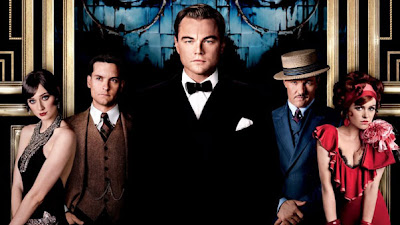
F. Scott Fitzgerald’s classic novella of the ‘Jazz Age’ (a term coined by Fitzgerald himself) returns to the big screen once again, this time starring Leonardo Di Caprio as the ambiguous Jay Gatsby and Carey Mulligan as the delicate socialite Daisy Buchanan, the object of Gatsby’s dream.  

Differing from the book, The Great Gatsby is narrated in flashbacks by the “morbidly alcoholic” Nick Carraway (Tobey Maguire) who has been submitted to a sanatorium for his depression and anxiety, an interesting 21st century take on the Prohibition era. Despite this, the script sticks reasonably close to Fitzgerald’s prose. Nick recalls renting a house in the West Egg district of Long Island in the summer of 1922, next door to the mysterious millionaire bootlegger, Gatsby.  Across the bay at East Egg are the houses of the ‘old money’ people, including Tom (Joel Edgerton) and Daisy Buchanan, whom Gatsby courted as an officer in the first world war.


Carey Mulligan as Daisy and Leonardo Di Caprio as Gatsby.
Like Gatsby himself, Baz Luhrmann’s take on the story is excessive and overstated. This works particularly well during the party scenes which Nick appropriately compares to “an amusement park.” Gatsby has, of course, planned his parties to perfection in order to impress Daisy. By building his life around the shallow, fickle Daisy, Gatsby surrenders his extraordinary power of visionary hope to the simple task of acquiring immense wealth. Gatsby’s dream is diminished to a motivation for material gain because the object of his dream is unworthy of his power of dreaming, the characteristic that makes him “great” in the first place.

Di Caprio makes a fantastic Gatsby, ironic, desperate and enigmatic in exactly the way Gatsby should be. The irony surrounding Gatsby’s character is clear: he throws lavish parties that he doesn't attend; he’s a bootlegger who doesn't drink; a pool owner who doesn't use his pool (apart from at the very end, of course) and a man of leisure who doesn't take part in any leisurely activities.


Mulligan conveys Daisy’s superficiality and vulnerability yet seems almost too likable for the role of Daisy who, along with Tom, is so careless that she allows “other people [to] clean up the mess [she] had made.” The poverty of George and Myrtle Wilson (Jason Clarke and Isla Fisher) at the Valley of the Ashes effectively serves as a stark contrast to the carefree lifestyle of Gatsby and the Buchanans. Despite playing a minor role in the film, Amitabh Bachchan shines as Gatsby’s corrupt business partner, Meyer Wolfsheim and finally, Elizabeth Debicki is just right for the role of the pessimistic young golfer, Jordan Baker, or “the single most terrifying person” Nick has ever met.

Luhrmann’s version of this classic tale is entertaining but by no means lives up to Gatsby, the novel. Published in 1925, Fitzgerald’s masterpiece was ahead of its time as a story about dreams: the flawed nature of the American dream in an era of artifice and illusion; Gatsby’s failure to realise that his dream of a future with Daisy is the wrong dream; the transcending power of our own dreams and imagination and our ability to hold onto hope in unfortunate circumstances.


Tuesday, 9 April 2013

REVIEW: BLACK WATCH- SECC, GLASGOW


Seven years after its hugely successful premiere, the National Theatre of Scotland’s Black Watch returned to the SECC last week. Gregory Burke’s immense production remains just as powerful to Scottish audiences, most of whom will have heard of the show by now but may not be quite as prepared for its poignant glory.

Directed by John Tiffany, Black Watch opened at the Edinburgh Fringe in 2006, where it won an array of awards: Scotsman Fringe First, the Critics Circle Award, a Herald Angel and the South Bank Show Award for Theatre. During its world tour, the production won the Laurence Oliver Award for Best New Play and the New York Drama Critics’ Circle Award for Best Foreign Play.

Based on Burke’s interviews with former soldiers, Black Watch is told as a series of flashbacks through the eyes of disillusioned Scottish soldiers to an investigative journalist who wants to know “what it was like…for the soldiers. On the ground.” The journalist’s naivety reflects the general public’s inability to understand the reality of Iraq. At one point when he asks a soldier suffering from depression about his experience, the man threatens to break his arm because “If he wants tay ken about Iraq, he has tay feel some pain.” From the voice over at the outset of the play, Burke defamiliarises the audience from a stereotypical war production: “Good evening, ladies and gentlemen, and welcome to the unique setting of the SECC…”

The script and delivery are powerful in their own way but the dialogue is accompanied with an unexpected sense of movement, drill and music. With a backdrop of diverse music from Cliff Martine, Yann Tiersen, The Gallant 42 and Snow Patrol to original music from Max Richter and Davey Anderson as well as the emotive Lament the Flouers o the Forest, we are taken from a pub in Fife to the battlefield in Iraq. Part of the enormous power of Black Watch is its use of movement: when the soldiers receive letters from home, they are never read out to the audience but they don’t need to be; the delicate hand gestures carried out by the cast demonstrate the emotions of the soldiers more than words ever could. Phenomenal among the wonderful cast in this technically brilliant production are Stuart Martin (Cammy), Andrew Fraser (Fraz), Daniel Portman (Kenzie), Richard Rankin (Granty), and Gavin Jon Wright (Nabsy).

Black Watch reveals what it means to be part of the legendary Scottish regiment, what it means to be part of the war of terror and what it means to survive the journey home. Despite displaying anti-war sentiments throughout, the production conveys a deep respect for the Black Watch tradition and its legacy.